

Kids Coding Classes: Find the Right Learning Pathway for Your Child

Xirons Offers

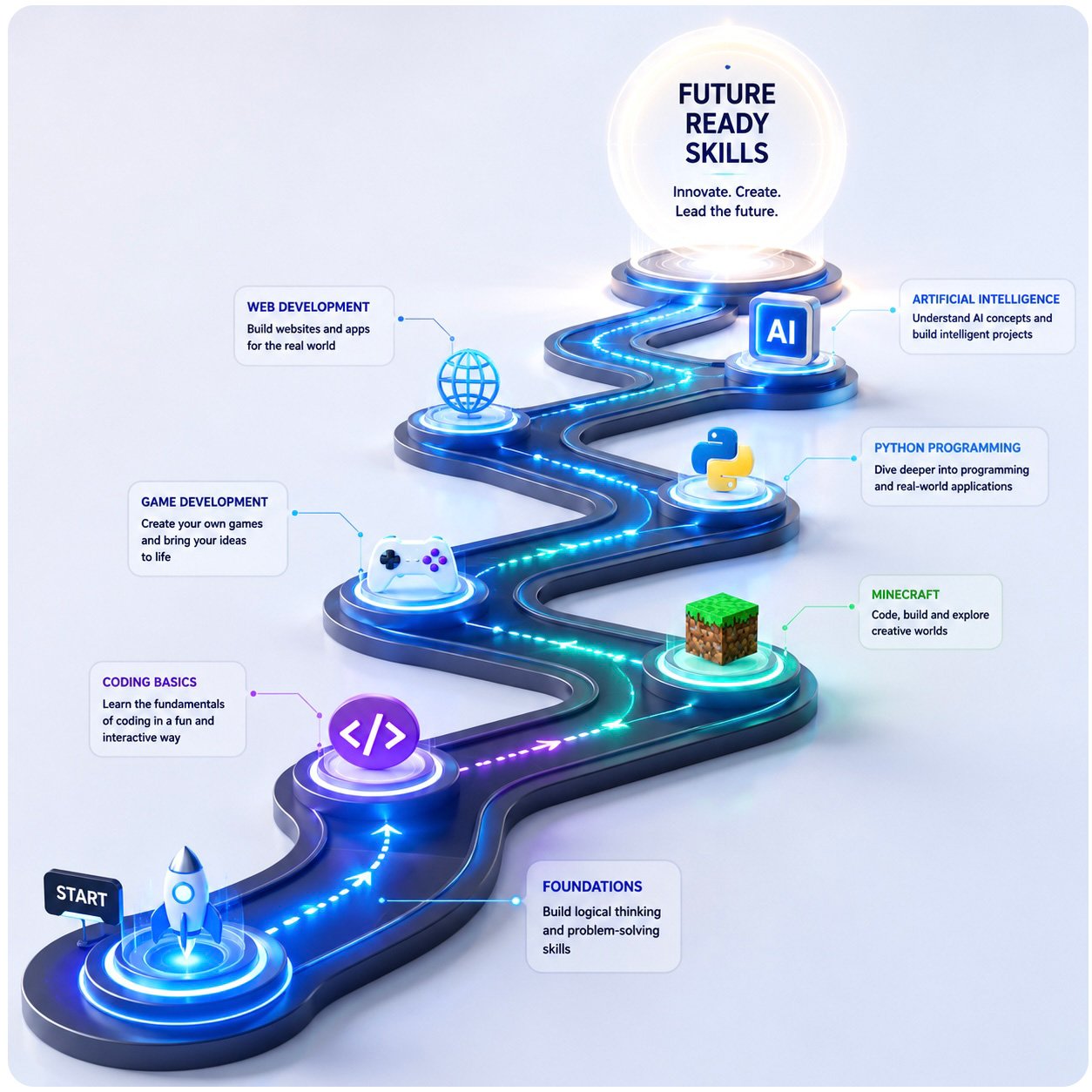
personalised coding classes for children aged 7–16, organised into three learning pathways: Foundation (ages 7–10), Core Programming (ages 9–16), and Future Technologies (ages 9–16). Every child starts at a different point, so instead of a one-size-fits-all curriculum, we match each learner to the pathway that fits their age, experience, confidence and interests, then adjust it as they grow.


image

Foundation Pathway (Ages 7–10):

Coding Classes for Beginners

Best for: children who are completely new to coding.

The Foundation Pathway teaches coding through games, creativity and interactive projects, so kids build computational thinking and confidence before touching a professional programming language.

Courses included:

  • Scratch coding for kids
  • Roblox Studio game design
  • Minecraft Education Edition

Skills your child will build: Computational thinking, logical reasoning, problem-solving, creativity, game design fundamentals, interactive storytelling, and confidence using technology.

What happens after: Children who complete this pathway understand core coding logic and are ready to move into text-based programming languages like Python when they’re ready, not on a fixed schedule.

image

Core Programming Pathway (Ages 9–16):

Learn Python and Web Development

Best for: children ready to write real code in professional languages.

This pathway moves kids from block-based coding into writing actual code, Python and web development, using the same tools professional developers use. They build real websites, applications and programs from scratch.

Courses included:

  • Python programming for kids
  • Web development for kids

Skills your child will build: Programming fundamentals, debugging, algorithm design, website development, project planning, and independent problem-solving.

What happens after: Students leave with real, working projects they’ve built themselves, a strong foundation for further computer science study and a portfolio they can be proud of.

image

Future Technologies Pathway (Ages 9–16):

AI for Kids

Best for: children ready to understand how artificial intelligence actually works, not just how to use AI tools.

This pathway goes beyond prompting a chatbot. Kids learn the fundamentals of machine learning, neural networks and Python programming, alongside responsible and ethical AI use, through hands-on projects.

Courses included:

  • Artificial Intelligence for Kids

Skills your child will build: AI literacy, machine learning fundamentals, Python programming, critical thinking, data awareness, ethical decision-making, and creative problem-solving.

What happens after: Students finish with a working understanding of how AI is built, plus beginner-friendly AI projects of their own, preparing them for a future where AI fluency matters.

image
image
image image

How Xirons Personalises Every Child's Coding Journey

Every learner progresses at their own pace. Some children move quickly into Python; others benefit from more time in game-based creative coding first. Our tutors continually reassess each student's confidence and interests, and recommend the next step only when the child is ready, not on a fixed timetable. As children advance, additional specialist and advanced courses open up, so the learning plan keeps growing with them.


FAQs

Frequently Asked Questions

No. The pathways are guidance, not a rulebook. During the free trial class, we recommend the most suitable starting point based on your child’s age, experience and goals, they can join at any level.

 Yes. Learners with prior coding experience can start at a more advanced stage after a short tutor assessment confirms the right fit.

 Most complete beginners start in the Foundation Pathway, where they learn coding concepts through games and interactive projects before moving into programming languages like Python.

Our tutors assess age, previous experience, confidence level and personal interests, then recommend the pathway and course that fits best, this happens during the free trial.

Yes. Every learner follows an individual plan designed to build practical skills and confidence at a pace that suits them, adjusted regularly as they progress.

Turning imagination into real-world skills
image
image
image